101 · 15 canons
Personal assistants
The half-century path from personal computing and calm technology to assistants with memory, tools, initiative and the ability to act across software.
TL;DR A personal agent is more than chat: it needs a model of the person, durable context, tools, judgment about interruption and a trust boundary. The old visions are useful because they expose how much of that product problem is still unsolved.

Cofounder of Lazyweb (a16z Speedrun). Previously grew subscriptions and built native ads at Duolingo. Writes First1000 (90,000+ subscribers).
Voices in this 101
Reading path 1
Read the original visions
Before today's models, the best computing thinkers had already described personal media, conversational guides and technology that recedes into daily life.
- 01
A Personal Computer for Children of All Ages ↗
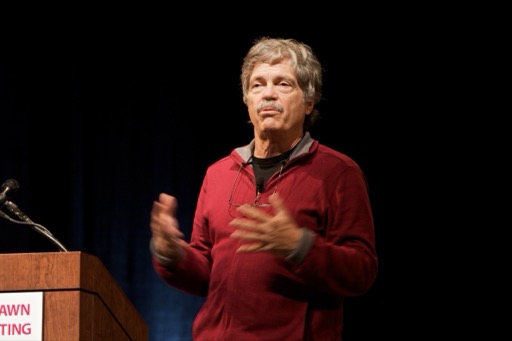 Alan Kay
Pioneering computer scientist behind the Dynabook and personal-computing vision.
- TL;DR
- Kay's Dynabook is a personal, portable medium for learning and creation—not a smaller terminal for consuming somebody else's software.
- What you'll read
- The 1972 design vision for a device, interface and programming environment that adapts to a person's ideas and development.
- 02
The Computer for the 21st Century ↗
 Mark Weiser
Xerox PARC chief scientist and originator of ubiquitous computing.
- TL;DR
- The most profound technologies disappear into ordinary activity; an assistant succeeds when it reduces attention demands instead of becoming another destination.
- What you'll read
- Weiser's ubiquitous-computing thesis, tabs, pads, boards and the social design principle now called calm technology.
- 03
Steve Jobs at the 1983 Aspen Design Conference ↗
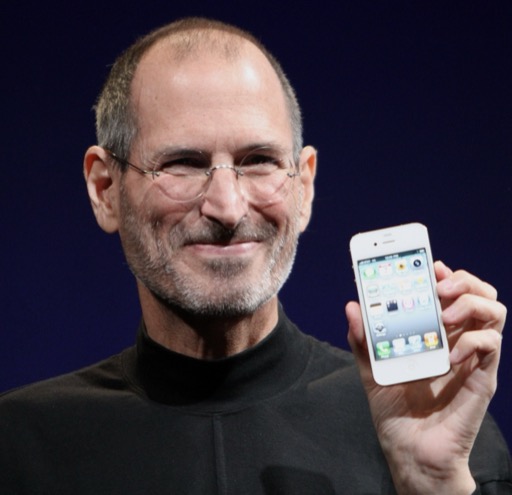 Steve Jobs
Apple cofounder whose early talks described computers as personal agents.
- TL;DR
- Jobs imagined computers becoming constant companions and intellectual guides, with design deciding whether that scale of adoption improved daily life.
- What you'll read
- The original talk and artifacts around a prescient vision of portable computers, networked communication and a future digital Aristotle.
- 04
The Knowledge Navigator concept ↗
 Apple
ApplePersonal-computing company behind Knowledge Navigator, Siri and Apple Intelligence.
- TL;DR
- Apple's concept video makes the assistant legible as memory, conversation, research, communication and action woven into a person's workday.
- What you'll read
- A historical product film whose successes and awkward assumptions are still useful design prompts for voice, context and proactive assistance.
- 05
AI agents will change how we use computers ↗
 Bill Gates
Microsoft cofounder and early writer on agents as the next software platform.
- TL;DR
- Agents could learn a person's preferences and coordinate services across applications, shifting software from menus and apps to delegated intent.
- What you'll read
- A modern platform thesis for personal, work, health and education agents, alongside questions about privacy, standards and market structure.
Reading path 2
Design the working relationship
The interface problem is delegation: what the assistant knows, when it acts, how it explains itself and how the person corrects it.
- 06
On-boarding your AI intern ↗
 Ethan Mollick
Wharton professor and author of One Useful Thing on working with AI.
- TL;DR
- Treat a general AI like a talented but context-poor intern: give goals, examples, constraints and feedback instead of expecting one perfect prompt.
- What you'll read
- A practical management metaphor for delegation, iteration and calibrating work that is impressive but uneven.
- 07
Centaurs and cyborgs on the jagged frontier ↗
Ethan MollickWharton professor and author of One Useful Thing on working with AI.
- TL;DR
- People work with AI either by dividing tasks or intertwining their effort, and both approaches fail when they misjudge the model's jagged capability boundary.
- What you'll read
- Evidence and operating patterns for deciding when to delegate, verify, collaborate closely or keep the task human.
- 08
Agency and agents ↗
Ethan MollickWharton professor and author of One Useful Thing on working with AI.
- TL;DR
- Giving models tools and room to plan produces useful initiative but also longer chains of compounding error and harder supervision.
- What you'll read
- Hands-on examples of agent behavior and a clear account of the gap between impressive autonomy and dependable work.
- 09
Intro to Large Language Models: the LLM OS ↗
 Andrej Karpathy
AI researcher and educator who popularized the LLM operating-system frame.
- TL;DR
- Karpathy's LLM OS frame treats the model as a CPU surrounded by memory, tools, retrieval, multimodal I/O and orchestration.
- What you'll read
- A technical but accessible architecture lecture that turns 'assistant' into concrete subsystems and security questions.
- 10
The coming wave ↗
 Mustafa Suleyman
CEO of Microsoft AI and cofounder of DeepMind and Inflection.
- TL;DR
- Powerful general systems spread because they are useful, while containment, accountability and social adaptation lag behind capability.
- What you'll read
- Suleyman's case for the technological wave, the containment problem and why personal agents cannot be designed as a capability race alone.
Reading path 3
Study today's product surfaces
These are the current attempts at memory, scheduled initiative, browsing and computer use. Read them as product contracts, not promises of general autonomy.
- 11
Memory and new controls for ChatGPT ↗
 OpenAI
Builder of ChatGPT, Codex, Site Tools, workspace agents and ChatGPT ads.
- TL;DR
- Useful personalization requires persistent context plus controls to inspect, remove, disable and separate what the assistant remembers.
- What you'll read
- OpenAI's memory model, saved memories, chat-history reference and the product controls that make persistence understandable.
- 12
Scheduled tasks in ChatGPT ↗
OpenAIBuilder of ChatGPT, Codex, Site Tools, workspace agents and ChatGPT ads.
- TL;DR
- A personal assistant becomes proactive when work can run later, but recurring execution needs visible schedules, notifications and easy cancellation.
- What you'll read
- The current task surface, supported schedules, plan limits, management controls and the boundary between a reminder and an autonomous workflow.
- 13
Introducing Operator ↗
OpenAIBuilder of ChatGPT, Codex, Site Tools, workspace agents and ChatGPT ads.
- TL;DR
- Computer use lets an assistant act through existing websites, but confirmations, takeover and task boundaries remain central to safe completion.
- What you'll read
- OpenAI's original browser-agent product, the Computer-Using Agent model, early task classes and the safety design around consequential actions.
- 14
Project Mariner ↗
 Google
Builder of Gemini, Project Mariner, AP2 and major agent surfaces.
- TL;DR
- Google's browser agent research explores planning and acting across web interfaces while keeping a person able to observe and redirect the work.
- What you'll read
- A primary description of the research prototype, multimodal browser understanding, parallel tasks and interaction-safety constraints.
- 15
Apple Intelligence ↗
ApplePersonal-computing company behind Knowledge Navigator, Siri and Apple Intelligence.
- TL;DR
- Apple's assistant strategy combines personal context, on-device processing, private cloud compute and cross-app actions under an explicit privacy story.
- What you'll read
- The shipped product framing for writing, Siri, visual intelligence, app intents and the system architecture used to protect personal data.